
.
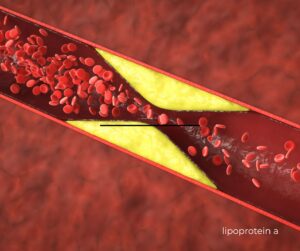
Lipoprotein a, aka Lp(a), is a cholesterol
that is being discussed more as it has not been traditionally tested for (we DO test for it in our Biohackr cholesterol panel) which is genetic and very linked to heart disease risk.
You can be doing all the right things- exercising, healthy weight, normal LDL and HDL and still be at high risk. A new medication may be able to help. Published in March 2025 in the New England Journal of Medicine, “Lepodisiran- A Long Duration Small Interfering RNA Targeting Lipoprotein a.” (Of note, there is another mRNA medication targeting Lp(a) which published their trial results in NEJM in 2022)
Lipoprotein a facts:
- It is highly genetic.
- It is not treatable currently by diet, exercise, or existing medications.
- It is estimated 64 million adults have it, causing a high risk of cholesterol build up in their arteries, which leads to heart attacks, stroke, impotence, and more.
- 20% of the population has it and it increases the risk of heart attacks by 2-3x.
- How does it work? It sticks to LDL (the bad cholesterol), making it more likely to clog arteries, it causes inflammation, and it leads to clots and inflammation.
- What is a good level?
- Normal Level: Less than 30 mg/dL or <75 nmol/L.
- Borderline Risk: 30-50 mg/dL (75-125 nmol/L).
- High Risk: Greater than 50 mg/dL or greater than 125 nmol/L.
The study was with the pharmaceutical company, looking at different dosing strengths and regimens. The original study of 320 patients were randomized. Their median baseline Lp(a) was 254 nmol/liter.
This study is the Phase 2 of a new drug called lepodisiran. In this study, they found one injection of the drug cut Lp(a) levels by 94% after six months. The effects continue to a year, with 88% reduction lower than baseline at one year. For those who got a second dose at six months, their reduction at the one year mark was 94.8%. Serious adverse events occurred in 35 patients but were deemed not related to medication or placebo. 12% of the high dose group had some skin irritation at site of injection.
How does it work? It targets the mRNA, which tells the body to make Lp(a). They describe it as “shooting the messenger,” so the body doesn’t get the signal to make the Lp(a).
Our thoughts at Biohackr Health?
We love that people are getting more educated about heart and vascular disease risk with cholesterol- going beyond the simplistic LDL and HDL. Lp(a) has been tough, as it is genetic with no way of improving it with diet, exercise, or current medications. If this one injection can improve things for a year, that is miraculous and will make such a difference to those affected.
Don’t know what your level is? Come in to Biohackr to get an advanced cholesterol panel, which looks at Lp(a) and more- Apo b, Apo a, C reactive protein, and more. Do a cardiac calcium scan to see if you already have signs of calcification of your heart arteries. TESTING
One article discussing the study talked about a man who had no risk factors- he exercised, was a good weight, and his doctor check ups showed normal cholesterol levels. At 53 he went to the doctor feeling a little short of breath. He learned ALL of his major heart arteries were blocked due to high Lp(a). Within three weeks he had a quadruple bypass surgery of his heart. He is a member of another drug trial, called Olpasiran, which has driven down Lp(a) by 95% in 9 months.
Until these medications have passed their trials, they won’t be available to the general public, but exciting that they are out there. Find out if you are at high risk. Get the test.
Medical Studies:
Lepdisirian New England Journal LINK
Olpasiran New England Journal LINK