
What is BPC-157?
BPC-157 also known as “Body protection Compound 157”
is a naturally occurring peptide made in the stomach which promotes health and homeostasis of the mucosa of the stomach. So why do the orthopedic surgeons do a comprehensive review of it? Because preclinical studies show it promotes healing from musculoskeletal injuries- broken bones, tendon ruptures, ligament tears, and muscle injuries. It is currently not approved by the FDA and is banned in professional sports.
But it helps and is increasingly being used by clinicians and athletes. This blog looks at a study done of the literature in orthopedic sports medicine to look at all the published data to try to extract information and applications of BPC-157.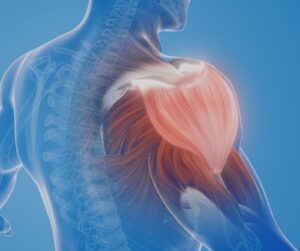
STUDY:
“Emerging Use of BPC-157 in Orthopaedic Sports Medicine: A Systematic Review.“ First they elucidate the ways it is thought for BPC 157 to be helping. These are pathways which are thought to be modulated by BPC157. This is very bench research science, but I think important to mention as it explains the “how” of it helping with recovery and repair.
- Increasing blood supply. This is done by increasing Vascular endothelial growth factors
- Helping with cell growth, proliferation, survival, migration and adhesion. This is all about wound healing. Increasing ERK1/2 (extracellular signal regulated kinase), FAK-Paxillin (focal adhesion kinase)
- Helping with growth hormone. Increasing KRAS AKT, and growth hormone
- Vasodilation (dilating the blood vessels to get more blood flow to the area). Increasing NOS, and Lowering COX2
- Downregulating inflammation. Lowering MPO, IL6, and TNF alpha
Systematic review of published studies. 36 met criteria, 35 of which were preclinical studies. Findings:
- Studies suggest BPC 157 enhances growth hormone receptor expression. It is NOT growth hormone. (which is frequently misunderstood).
- Preclinical models showed it improved functional, structural, and biomechanical outcomes in muscle, tendon, ligament, and bone injuries.
- One study, retrospective, of injection of BPC 157 into the joint for unspecified chronic knee pain showed 7 or 12 patients had relief for more than 6 months
- It is metabolized by the liver, with a half life of less than 30 minutes, followed by clearance by the kidneys
- Preclinical studies showed no adverse effects.
They conclude, “BPC 157 shows promise for recovery from musculoskeletal injuries.” They thought some adverse effects are due to the unregulated nature of it currently- who manufactures it, is it contaminated, and unknown clinical safety.
What do we think of BPC 157 at Biohackr Health?
This is the essence of biohacking. We understand that there have not been many human trials to look at the efficacy and possible side effects. What we have seen in the preclinical studies is promising. We would like more of these to be “on label,” so that it can be regulated and the manufacturing, concentration, and purity can be monitored. As minimal human trials have been done, it is unclear the ideal amount, timing, and length of treatment.
Know we are avidly watching for updates and expect trials to come soon given its popularity. This is something to discuss with your Biohackr Team. What is your goal? Have you had an injury? What are your other medical issues? Do you have a high cancer risk?
On April 15, 2026, the FDA formally announced it would remove BPC‑157 from Category 2. This is a green light, but it- with 14 other peptides- have not been formally reclassified, which may happen in a meeting in July. Category 1 under the FDA’s bulk drug substance framework means the substance is considered “appropriate for use in compounding, provided it is prepared by licensed pharmacies under a valid prescription.” Stay tuned.
Medical Citation
Emerging Use of BPC-157 in Orthopaedic Sports Medicine: A Systematic Review, Hospital for Special Surgery Journal, July 2025